
SBTi Net-Zero Standard 2.0: What It Means for UK Growth Companies
The Science Based Targets initiative (SBTi) has published its new Corporate Net-Zero Standard 2.0, introducing a more proportionate approach to target setting for smaller companies.
One of the biggest changes is the introduction of two company categories, with reporting requirements tailored according to company size. For many UK growth companies, this means the requirements are less extensive than under the previous standard.
While an SBTi commitment will not be the right choice for every business, the updated framework makes validation a more realistic option for many companies that have already begun measuring and reporting their emissions.
The new company categories
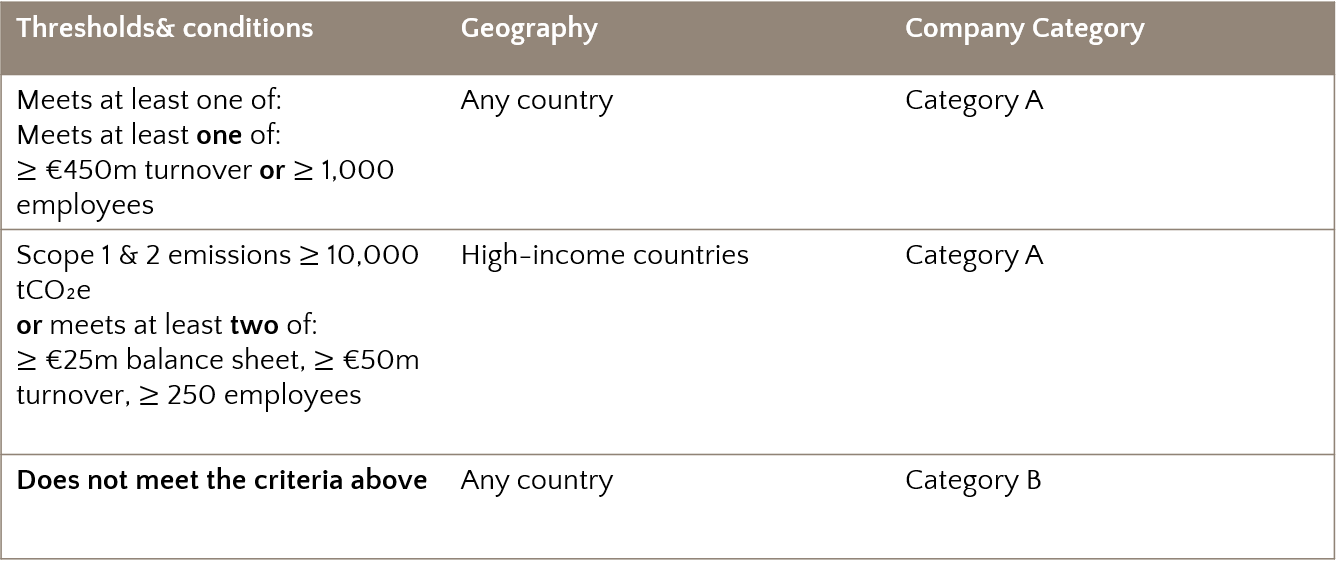
The updated standard separates companies into Category A and Category B, with requirements tailored according to company size.
Addidat's analysis indicates that around 60% of AIM companies are likely to fall into Category B, meaning many UK growth companies will be subject to the more proportionate reporting requirements.
The tables below summarise the key differences between Category A and Category B. For Category B companies, near-term Scope 1 and 2 targets and a climate transition plan remain key requirements, while several elements that previously applied more broadly are now optional or recommended.
Summary of the requirements
The tables below summarise the key differences between Category A and Category B. For Category B companies, near-term Scope 1 and 2 targets and a climate transition plan remain key requirements, while several elements that previously applied more broadly are now optional or recommended.
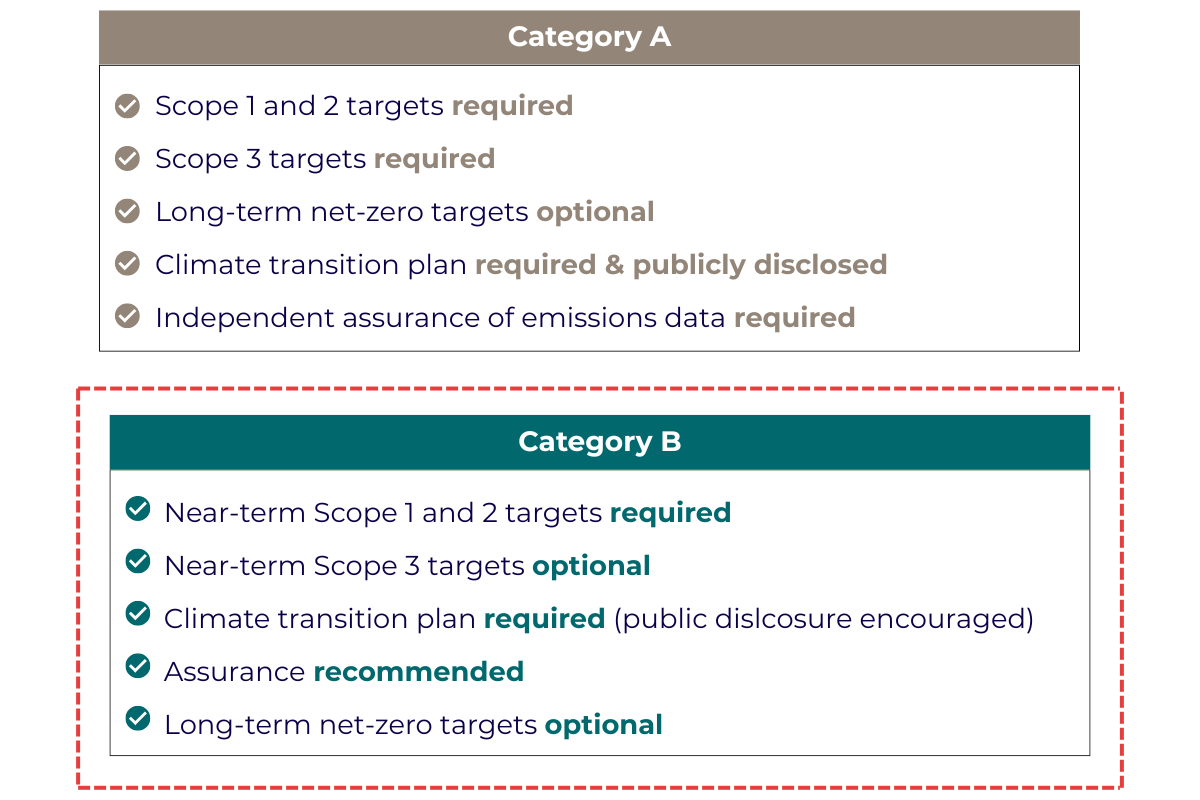
Both categories now focus on rolling five-year target cycles, placing greater emphasis on demonstrating progress over time rather than making long-term commitments alone.
Where do UK Growth Companies stand
Many UK growth companies already have much of the data needed for an SBTi commitment. As a result of the new Category B requirements, many businesses may already have the foundations needed to pursue SBTi validation should they decide it is right for them. However, an SBTi commitment will not be appropriate for every organisation, and businesses should consider whether it aligns with their strategy, stakeholder expectations and available resources.
Our analysis of AIM company reporting shows that many businesses are already reporting information that aligns with the new Category B requirements. The examples below highlight where companies have already made progress.
Scope 1 & 2 near-term targets
➡ SBTi requirement: Measure and report Scope 1 and 2 emissions and set near-term targets.
✔ Many AIM companies are already doing this: 36% already report Scope 1 and 2 emissions.
Climate transition plan
➡ SBTi requirement: Develop a climate transition plan showing how emissions reduction targets will be achieved.
✔ Many AIM companies have already started building this foundation:28% already report market-based emissions, an important step towards developing a credible transition plan.
Scope 3 near-term targets
➡ SBTi requirement: Measure Scope 3 emissions. For Category B companies, setting a near-term Scope 3 target is optional.
✔ Many AIM companies are already ahead of this requirement:76% already disclose Scope 3 emissions.
What should companies do next?
Whether or not an SBTi commitment is appropriate will depend on each organisation's strategy, stakeholder expectations and available resources. For businesses considering a commitment, the following steps provide a sensible starting point.
Assess how close you are to an SBTi commitment
Identify whether you're likely to fall into Category A or B.
Compare your current climate reporting against the new requirements.
Decide if SBTi is right for your business
Consider investor and stakeholder expectations.
Evaluate whether an SBTi commitment aligns with your strategy.
Build the right foundations
Before committing, start to:
Measure your emissions.
Understand your energy use and decarbonisation opportunities.
Develop a credible plan to reduce emissions over time.
Once these foundations are in place, businesses are in a much stronger position to decide whether to begin the SBTi validation process.