
Climate Value at Risk: The escalating financial impacts of climate change on UK Growth Companies
The financial impacts of climate change are no longer theoretical. For UK growth companies, climate risk is increasingly translating into revenue pressure, margin volatility and operational disruption. Climate risk is crystallising into financial outcomes and it is doing so within typical 3-5 year strategy cycles. The question is no longer whether climate change will affect businesses, but how prepared they are when it does.
Climate scenarios are worsening
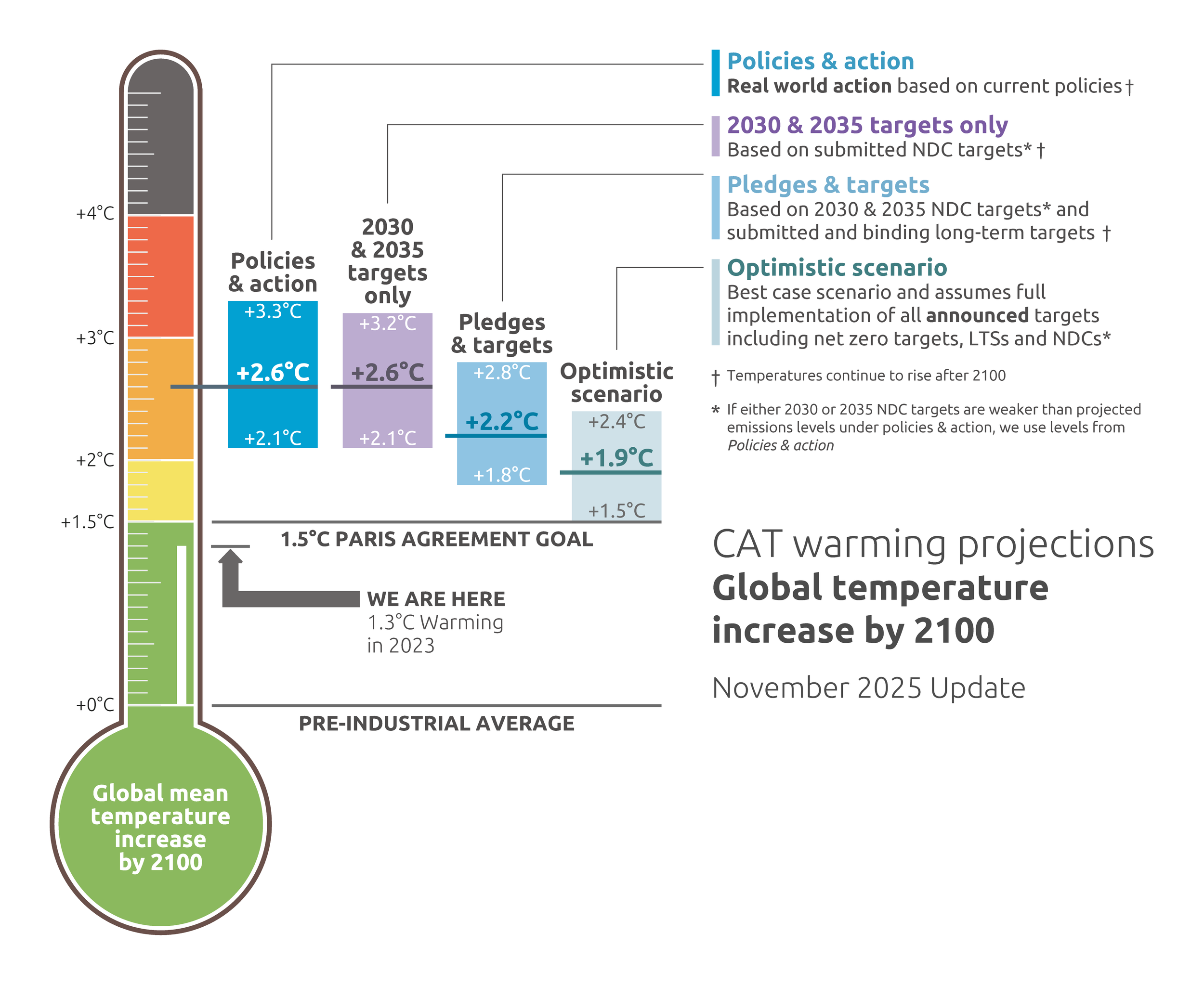
According to research, the world has already reached approximately 1.3°C of warming. Even if current policies are fully implemented, significant further warming is effectively locked in.
UK policy expectations are also shifting. Businesses are now increasingly expected to assess resilience against higher warming scenarios, including 2°C and even 4°C, rather than relying solely on the former 1.5°C ambition.
In short, companies need to plan for increasingly severe physical risks, from extreme heat to flooding and supply chain disruption. Financial impacts may emerge faster and more sharply than many companies expect.
Financial impacts are already crystallising
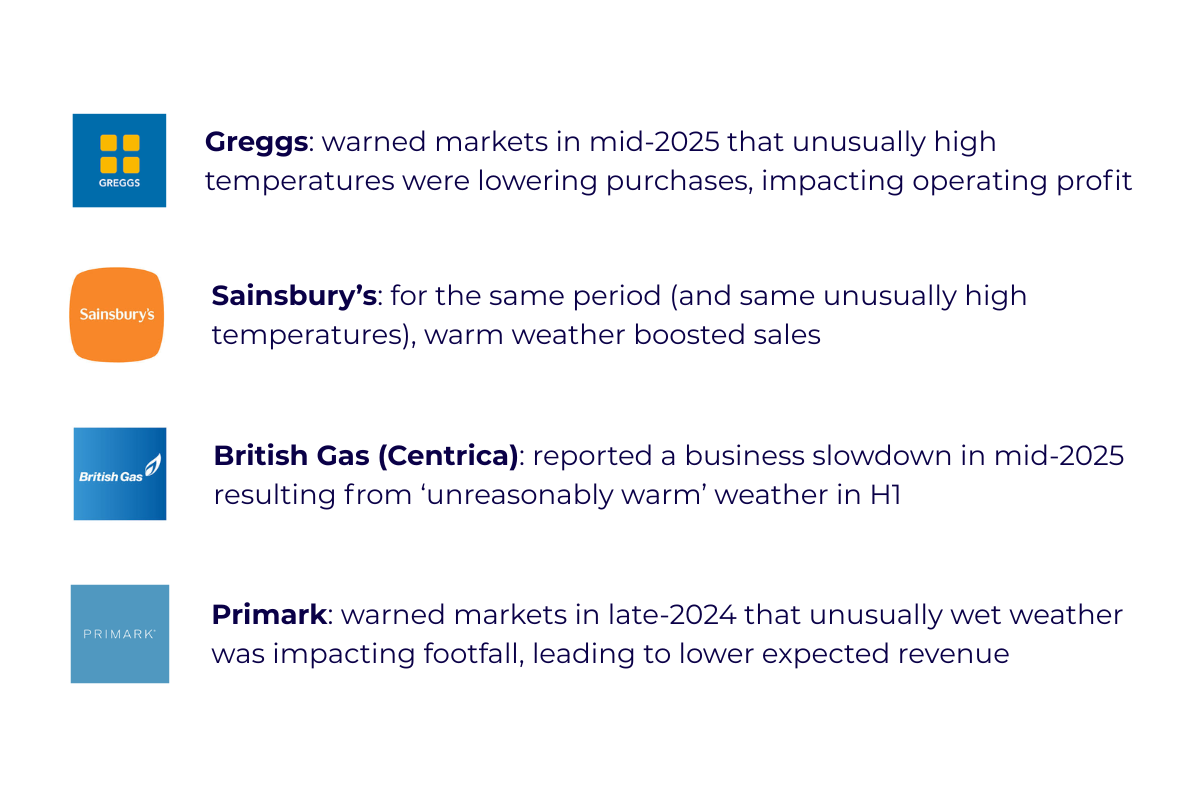
The impacts are not distant or abstract. They are visible in recent market disclosures. Major UK brands have already warned markets about weather-driven performance shifts. Unusually warm or wet conditions have affected footfall, sales volumes and operating profits across retail and energy. Whilst these impacts are not new, given sectors like this are traditionally exposed to the impacts of climate, we are now seeing similar warnings being issued across a wider range of sectors.
Impacts are spreading across sectors and a preparedness gap remains
Addidat’s data shows that climate-related risks are emerging even in sectors without obvious direct exposure.
Consumer discretionary businesses are experiencing sustained changes in spending patterns. Industrial firms are reporting productivity impacts. Even technology companies, once viewed as largely insulated, are issuing profit warnings linked to indirect climate effects such as reduced usage at client sites during extreme heat.
Despite these signals, most UK growth companies are not well prepared. Only around 20% of AIM companies currently report climate risks in line with TCFD-style disclosures. A review by the Financial Reporting Council in early 2025 similarly found that financial impacts of climate risks are often not well quantified. With limited regulatory requirements applying to many UK growth firms, a significant preparedness gap remains.
How to address risk
The good news is that addressing climate risk does not require over-engineering. Practical steps can materially improve resilience:
Understand which ESG topics are financially material to your sector
Identify and quantify specific climate risks and opportunities
Integrate climate considerations into business planning and mitigation strategies
Disclose clearly to signal preparedness and protect stakeholder confidence
Climate risk is financial risk.
The companies that understand their real exposure, and act on it, will be the ones that protect value, maintain investor confidence and build resilience as conditions worsen.